Google Workspace Account Takeovers Without Passwords: Investigating OAuth App Abuse and Token Persistence
Most teams still picture account takeover as a stolen password plus a failed MFA process. That model is now incomplete. In modern Google Workspace environments, delegated OAuth access, third-party app approvals, and token-driven access paths can matter just as much as credential theft. Google Workspace also no longer supports less secure password-based app access for many third-party scenarios, which makes OAuth-driven access paths even more operationally important.
That changes what a serious Google Workspace account takeover investigation should look like.
This is not another generic phishing post. This is about what defenders should investigate when the attacker may never need the password in the first place, and why a password reset alone does not automatically tell you whether the incident is over. Google documents that some OAuth 2.0 tokens are automatically revoked on password change, but it also documents important caveats and app-specific exceptions. Admins can also review and revoke active third-party OAuth access by user and by app, which means the investigation has to go beyond “reset password and move on.”
Why this attack path matters now
When users authorize an app, Google records that access through OAuth. Google Workspace admins can search OAuth log events to review which third-party mobile or web applications users accessed and when third-party applications were authorized to access Google Account data such as Contacts, Calendar, and Drive. Depending on edition, admins may also have the security investigation tool to identify, triage, and act on security and privacy issues more deeply.
That means a modern incident investigation has to answer questions like these:
- Which user approved the app?
- What scopes were granted?
- Was the approval expected, or tied to a suspicious consent prompt?
- What happened after that approval?
- Was access limited to one app, or did it turn into broader identity abuse?
- Did the response team preserve evidence before revoking access?
Those are incident-response questions, not just IAM hygiene questions. They sit directly in the overlap between SaaS compromise response, identity forensics, and post-incident hardening. That is exactly where evidence-first work matters most. Pentest Testing Corp’s own recent research on OAuth redirect abuse makes the same point: the first 48 hours should focus on preserving evidence, scoping impact, and containing the right things in the right order.
How token-based takeovers work in Google Workspace
At a high level, the attacker’s goal is simple: get trusted delegated access without needing long-term control of the password.
A common pattern looks like this:
- A user is pushed toward a malicious or misleading workflow: fake document access, collaboration request, e-signature lure, meeting lure, or another consent-driven flow.
- The user reaches an OAuth approval screen or an attacker-controlled redirect path that results in application access.
- The granted app receives delegated permissions to Google Workspace data.
- The attacker uses that app access for reconnaissance, mailbox or file access, persistence, or follow-on abuse.
Google explains that when a user grants access, it is recorded through a 3-legged OAuth access token, and that admins can review and revoke active 3-legged OAuth tokens by user and app. Pentest Testing Corp’s recent OAuth incident post also notes that defenders should investigate which user clicked, which app or redirect path was involved, what follow-on access occurred, and what persistence may have happened next.
The key point is this: a Google Workspace account takeover investigation is often less about proving “password compromise” and more about proving or disproving delegated access abuse.
Why password resets do not end the investigation
A password reset is still an important containment action. But it is not a complete theory of the incident.
Google documents that OAuth 2.0 tokens for access to certain products are automatically revoked when a user’s password changes, and that password change invalidates both access tokens and refresh tokens in those supported scenarios. But Google also documents caveats that matter during investigation: Apps Script access is excluded from this revocation behavior, Android-triggered password changes do not revoke the account-sync OAuth token used by that Android device, and Gmail IMAP sessions authenticated with OAuth are not affected by the password change beyond normal access-token lifetime.
That is why responders should avoid saying, “We changed the password, so the takeover is gone.”
A stronger, evidence-backed statement is: “We changed the password, reviewed app-level access, preserved identity evidence, and validated whether any suspicious delegated access remained.”
That is also why your investigation should include app approvals, scope history, admin activity, and user-account changes—not just sign-in alerts.
What Google Workspace admins should review first
If you suspect OAuth app abuse, start with the evidence sources most likely to show app authorization, user-account changes, and admin-side actions.
1) OAuth log events
Google’s OAuth log events let admins review third-party application usage and data access requests, including when a third-party application was authorized to access Google Account data. This should be near the top of your investigation list.
Review for:
- unfamiliar third-party apps
- newly authorized apps around the incident window
- repeated authorizations tied to the same user
- unusual app names, publishers, or access timing
- authorizations affecting high-value users, admins, finance, or integration owners
2) User log events
Google’s User log events help admins review critical user-driven account actions, including changes to passwords, account recovery details, and 2-Step Verification enrollment. These are important for scoping whether the incident was limited to delegated app access or involved broader account manipulation.
Review for:
- password changes
- recovery email or phone updates
- 2SV enrollment changes
- suspicious login patterns associated with the affected timeline
3) Admin log events
Google’s Admin log events show actions performed in the Admin console, such as service changes or user-management actions. This is essential if you are trying to determine whether a malicious or compromised administrator made changes that helped the incident persist.
Review for:
- changes to app access policy
- allowlisting or trusting apps
- account suspensions or reinstatements
- service changes that coincide with the compromise window
4) Security investigation tool, if your edition supports it
Google documents that the security investigation tool is available only for certain editions, but where supported it gives administrators a stronger workflow for identifying, triaging, and taking action on security and privacy issues across the domain.
5) OAuth scope grants reports
Google’s OAuth scope grants by product report lets security teams see OAuth grant activity over time and view grant activity by product, scope, or user. That makes it useful for identifying abnormal spikes, unexpected scope growth, or sensitive users tied to new app grants.
Evidence to preserve before broad containment
One of the biggest mistakes in Google Workspace DFIR is destroying the sequence before you understand it.
Pentest Testing Corp’s own incident-response guidance is clear on this point: preserve evidence first, then contain. In its OAuth incident playbook, the first hours focus on capturing the original lure, user screenshots, identity logs, app-access records, endpoint traces, and a UTC-based action log before broad resets or app removal make reconstruction harder. Its DFIR service page makes the same case: evidence preservation comes before timeline reconstruction, root-cause analysis, and containment.
Preserve at least the following:
- original phishing email, headers, URLs, and attachments
- screenshots of the consent flow or redirect sequence
- OAuth log events for the affected window
- user log events for account changes
- admin log events for console-side changes
- app access policy state at the time of investigation
- browser history and download history from affected endpoints
- EDR, proxy, DNS, or network telemetry if available
- a UTC action log showing who collected what and when
A simple investigation worksheet can help keep the case defensible:
UTC Time | User | Evidence Source | App / OAuth Client | Event | Scope / Data Access | Collector | Hash / Export ID | NotesIf your organization already forwards Google Workspace logs to Google Cloud, preserve those exports too. Google documents that OAuth, user, and admin log event data can be forwarded to Cloud Logging for querying, storage, and routing.
Containment without destroying evidence
Containment should be deliberate, not impulsive.
After evidence capture, a practical sequence looks like this:
- restrict or disable suspicious app access
- revoke app access where warranted
- reset passwords for confirmed affected users
- revoke sessions as part of controlled response
- review recovery methods and 2SV state
- check whether the user’s mailbox, Drive, or app integrations show follow-on abuse
- document every action in the case record
Google documents that admins can control which apps access Google Workspace data and can restrict services so that only trusted or specifically configured apps can access them. Google also notes that Gmail, Drive, and Chat can be restricted at high-risk scope level in some scenarios. That makes API controls an important containment and hardening lever after you preserve the evidence you need.
Google also documents that admins can review active third-party OAuth access and revoke 3-legged OAuth tokens by user and by app. That matters because containment should focus on the actual delegated relationship that was abused, not just the user’s password state.
What suspicious consent usually looks like in practice
In real environments, suspicious app consent often shows up as a pattern rather than a single alert.
Watch for combinations like:
- a user reporting an unfamiliar consent screen
- a new third-party app authorization in OAuth logs
- a user-account change close to the same window
- abnormal downloads, browser redirects, or endpoint activity
- high-value roles tied to fresh app grants
- repeated “Sign in with Google” behavior to unfamiliar apps
- elevated app permissions that do not fit the user’s job function
Pentest Testing Corp’s recent OAuth response article recommends reviewing OAuth log events, the OAuth grants to new apps report, API controls, and audit/investigation searches for exactly this reason. It also recommends correlating identity, email, endpoint, and app-consent evidence instead of treating any one signal as sufficient on its own.
Hardening OAuth governance after the incident
A mature post-incident response should not stop at cleanup. It should reduce the chance of the same path succeeding again.
Start with governance changes like these:
- move from open third-party app access toward trusted or specific app policies
- review high-risk Google data scopes and restrict them where possible
- routinely audit new app grants and unusual scope activity
- review who can authorize or trust apps at scale
- monitor admin-side changes that affect app access governance
- improve user training around consent prompts, not just password phishing
- strengthen risk-based authentication and recovery controls for high-value users
Google’s documentation supports the technical side of that approach: app access can be restricted to trusted or specific apps, OAuth grant activity can be tracked over time, and user and admin actions can be reviewed through dedicated log sources. Pentest Testing Corp’s related identity-hardening content also emphasizes that modern authentication defense has to move beyond static MFA into risk-based controls, session-aware monitoring, and stronger recovery paths.
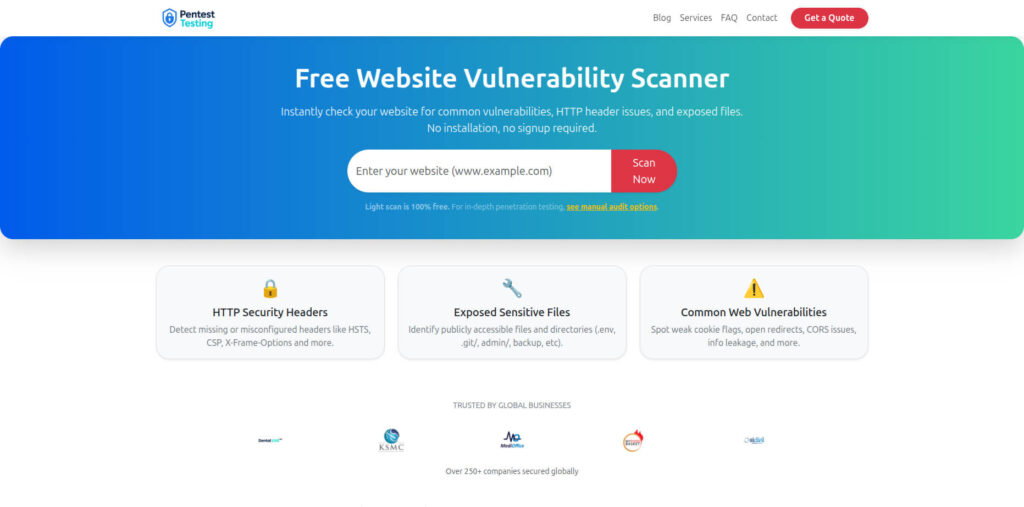
Free Website Vulnerability Scanner tool page
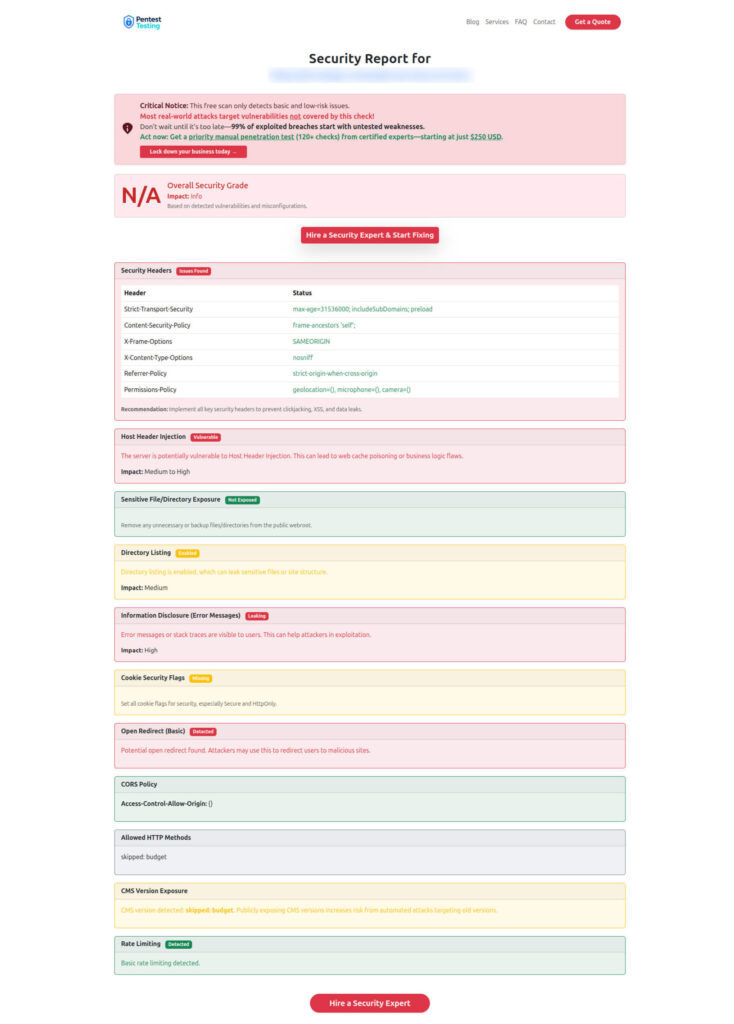
Sample report to check Website Vulnerability
Where Pentest Testing Corp fits your Security requirements
If the incident is still active, Digital Forensic Analysis Services are the right first conversation. Pentest Testing Corp positions this service around evidence preservation, timeline reconstruction, root-cause analysis, compromise scope, IOCs, and recovery guidance, including email and cloud account compromise cases involving Gmail, Outlook, Microsoft 365, and Google Workspace.
If the immediate incident is contained but the control gaps remain, Remediation Services and Risk Assessment Services fit next. Pentest Testing Corp’s service pages position remediation around technical, policy, and procedural fixes, and risk assessment around identifying vulnerabilities, prioritizing risk, and building a roadmap before auditors or customers force the issue.
And if the deeper question is whether your auth flows, delegated access, SSO paths, or API-connected workflows are still weak, a follow-on Web Application Penetration Testing or API Penetration Testing engagement is the right validation step. Pentest Testing Corp’s web and API testing pages explicitly cover SSO/OAuth, session handling, RBAC, JWT/OAuth security, BOLA/BFLA, and business logic abuse.
Related reading on Pentest Testing Corp
For teams that want to go deeper after reading this guide, these internal resources fit naturally:
- OAuth Redirect Abuse: First 48 Hours
- 7 Proven Digital Forensic Analysis Steps for Legal Evidence
- 7 Powerful Risk-Based Authentication Hardening Moves
Final takeaway
A strong Google Workspace account takeover investigation is not just a login review. It is an evidence-first reconstruction of how access was granted, what scopes were involved, what follow-on activity occurred, and whether delegated access or app-level trust relationships still need to be removed.
If you are seeing unfamiliar consent prompts, suspicious third-party app access, unexpected account changes, or evidence that a password reset did not fully answer the question, do not guess. Start with evidence preservation, review OAuth, user, and admin activity in the right order, and then contain based on what the data actually shows. For active response, book Digital Forensic Analysis Services. For post-incident validation of OAuth, session handling, and delegated-access risk, book an identity-focused Web Application Penetration Testing or API Penetration Testing engagement.
🔐 Frequently Asked Questions (FAQs)
Find answers to commonly asked questions about the Google Workspace Account Takeover Investigation.