7 Powerful Mobile Post-Patch Validation Playbook (iOS/iPadOS 26.2 + Android Jan 2026)
Security teams don’t lose incidents because they “didn’t patch.” They lose them because they patched without proof, and missed pre-patch compromise signals that would’ve triggered containment and forensics.
This mobile post-patch validation playbook is built for real-world operations: MDM-driven validation, audit-friendly evidence, and DFIR triage triggers—specifically for iOS/iPadOS 26.2 and the Android January 2026 security update cycle.

If you want deeper help aligning this with your environment, start here:
- Risk Assessment Services: https://www.pentesttesting.com/risk-assessment-services/
- Remediation Services: https://www.pentesttesting.com/remediation-services/
- Forensic Analysis Services (DFIR): https://www.pentesttesting.com/digital-forensic-analysis-services/
- Mobile App Pentest Testing: https://www.pentesttesting.com/mobile-application-pentest-testing/
- API Pentest Testing: https://www.pentesttesting.com/api-pentest-testing-services/
High-impact mobile bulletin recap (why this matters)
iOS/iPadOS 26.2: Web content risk is fleet-wide
When iOS/iPadOS WebKit bugs are patched, the exposure is broader than “Safari users.” On iPhone/iPad, web rendering is deeply integrated across apps, embedded browsers, and link handlers. That’s why iOS/iPadOS post-patch validation must include proof of OS baseline and triage for suspicious pre-patch indicators.
Android January 2026: patch level verification is the control
Android patching is only real when devices report the expected security patch string (and your MDM shows enforced compliance). The January 2026 cycle highlights why you must verify—not assume—deployment completion.
New guide: Patching isn’t the finish line—proving clean after patching is. Use our Post-Patch Forensics Playbook to validate Windows, Android, and iOS with real evidence and reporting:
https://www.pentesttesting.com/post-patch-forensics-playbook-2026/
The 7-step mobile post-patch validation playbook
1) Define “patched” as a policy (not a feeling)
Make your baseline explicit and machine-checkable.
Example: baseline policy file
# mobile_patch_baseline.yaml
baseline_name: "Jan-2026 Mobile Patch Baseline"
ios_ipados:
  min_os_version: "26.2"
  required_within_hours: 72
android:
  min_security_patch_level: "2026-01-05"
  required_within_hours: 72
evidence_requirements:
  - mdm_export_csv
  - compliance_summary_csv
  - exceptions_register_csv
  - evidence_manifest_sha256
Why it matters: when procurement, customers, or auditors ask “Are we patched?”, you answer with exported evidence, not screenshots and guesswork.
2) Build a single inventory export (MDM-first)
Your playbook is only as strong as your inventory. Export all managed mobile endpoints with fields you can validate:
Minimum fields
- Device ID / Serial (or stable ID), user, department
- Platform (iOS/iPadOS/Android), OS version, last check-in
- Android security patch level
- Compliance state, encryption state, jailbreak/root status (if available)
- Last policy sync time
PowerShell example (Microsoft Intune / Graph export pattern)
# Export managed device inventory for mobile post-patch validation
# Requires: Microsoft.Graph module
Connect-MgGraph -Scopes "DeviceManagementManagedDevices.Read.All"

$devices = Get-MgDeviceManagementManagedDevice -All |
  Select-Object `
    Id, DeviceName, OperatingSystem, OsVersion, `
    UserPrincipalName, ComplianceState, LastSyncDateTime, `
    AndroidSecurityPatchLevel

$devices | Export-Csv ".\mdm_mobile_inventory.csv" -NoTypeInformation
Write-Host "Saved mdm_mobile_inventory.csv ($($devices.Count) rows)"
Tip: If your MDM doesn’t expose AndroidSecurityPatchLevel directly, export what it does provide and enforce patch compliance via your MDM’s built-in compliance policies + exception register.
3) Patch in rings—and document exceptions
Rings reduce operational risk and improve completion rates.
Ring model (keep with the change ticket)
# mobile_rollout_rings.yaml
rings:
  - name: "Ring 0"
    scope: "IT + MDM admins"
    target_percent: 2
  - name: "Ring 1"
    scope: "Privileged users (exec/admin/finance/security)"
    target_percent: 10
  - name: "Ring 2"
    scope: "All remaining managed devices"
    target_percent: 88
exceptions:
  allowed_reasons:
    - "Device offline"
    - "OS not supported"
    - "User on leave"
    - "Business-critical app incompatibility"
  require_compensating_controls: true
If you need help turning this into a repeatable operational standard, your fastest path is a tailored engagement via:
- Risk Assessment Services: https://www.pentesttesting.com/risk-assessment-services/
- Remediation Services: https://www.pentesttesting.com/remediation-services/
4) Post-patch validation: compute compliance (don’t eyeball it)
Use automation to produce an MDM compliance scoreboard.
Python: validate iOS/iPadOS versions + Android patch levels
import csv
from datetime import datetime

BASELINE_IOS = (26, 2)            # iOS/iPadOS 26.2+
BASELINE_ANDROID_PATCH = "2026-01-05"  # Android security patch level

def parse_ios(v: str):
    parts = (v or "").split(".")
    nums = [int(p) for p in parts if p.isdigit() or p.isnumeric()]
    while len(nums) < 2:
        nums.append(0)
    return tuple(nums[:2])

def ios_ok(v: str) -> bool:
    major, minor = parse_ios(v)
    return (major, minor) >= BASELINE_IOS

def android_ok(patch: str) -> bool:
    # patch format expected: YYYY-MM-DD
    return (patch or "") >= BASELINE_ANDROID_PATCH

in_file = "mdm_mobile_inventory.csv"
out_file = "mobile_patch_compliance.csv"

with open(in_file, newline="", encoding="utf-8") as f, open(out_file, "w", newline="", encoding="utf-8") as o:
    r = csv.DictReader(f)
    fieldnames = r.fieldnames + ["PatchCompliant", "Baseline", "CheckedAt"]
    w = csv.DictWriter(o, fieldnames=fieldnames)
    w.writeheader()

    for row in r:
        os_name = (row.get("OperatingSystem") or "").lower()
        os_ver = row.get("OsVersion") or ""
        and_patch = row.get("AndroidSecurityPatchLevel") or ""

        compliant = False
        baseline = ""

        if "ios" in os_name or "ipad" in os_name:
            compliant = ios_ok(os_ver)
            baseline = "iOS/iPadOS >= 26.2"
        elif "android" in os_name:
            compliant = android_ok(and_patch)
            baseline = "Android SPL >= 2026-01-05"

        row["PatchCompliant"] = "YES" if compliant else "NO"
        row["Baseline"] = baseline
        row["CheckedAt"] = datetime.utcnow().isoformat() + "Z"
        w.writerow(row)

print(f"Saved: {out_file}")
Outputs you should keep
mdm_mobile_inventory.csv(raw export)mobile_patch_compliance.csv(computed proof)exceptions_register.csv(documented non-compliance with reasons)
5) Evidence collection: capture what you can (without breaking privacy)
Post-patch validation is about being patched now. DFIR readiness is about determining whether compromise happened before patch.
Android evidence collection (ADB-based, controlled)
Use only on devices you’re authorized to investigate.
#!/usr/bin/env bash
set -euo pipefail

CASE_ID="${1:-CASE-ANDROID-001}"
OUT="evidence_${CASE_ID}"
mkdir -p "$OUT"

adb devices

adb shell getprop ro.build.version.security_patch > "$OUT/android_security_patch_level.txt"
adb shell getprop ro.build.version.release > "$OUT/android_os_version.txt"
adb shell getprop ro.product.model > "$OUT/android_model.txt"

# Installed packages + permissions snapshot
adb shell pm list packages -f > "$OUT/android_packages.txt"
adb shell dumpsys package > "$OUT/android_dumpsys_package.txt"

# System state snapshots
adb shell dumpsys activity > "$OUT/android_dumpsys_activity.txt"
adb shell dumpsys deviceidle > "$OUT/android_dumpsys_deviceidle.txt"

# Logs (best-effort)
adb logcat -b all -d > "$OUT/android_logcat_all.txt" || true
adb bugreport > "$OUT/android_bugreport.zip" || true

echo "Done: $OUT"
iOS/iPadOS evidence (what’s realistic)
Deep iOS forensics varies by device state, management posture, and OS protections. Even so, you can still collect high-signal evidence:
- MDM device record export (OS version, compliance, profiles, last check-in)
- Apple ID security events (unknown devices, new sessions, MFA changes)
- Suspicious configuration profiles (unexpected MDM/profile installs)
- sysdiagnose (when feasible in your process)
If you have local access with trusted pairing (lab/IT workflow), you can capture basic device metadata:
# Example tooling pattern (requires a trusted/pairing workflow)
# Capture device summary + syslog (best-effort)
CASE_ID="${1:-CASE-IOS-001}"
OUT="evidence_${CASE_ID}"
mkdir -p "$OUT"

ideviceinfo > "$OUT/ios_deviceinfo.txt" || true
idevicediagnostics diagnostics > "$OUT/ios_diagnostics.txt" || true
idevicesyslog > "$OUT/ios_syslog.txt" || true
6) Triage triggers: when to escalate to DFIR vs. “light validation”
Use clear triggers so your team doesn’t argue during an incident.
Escalate to full DFIR when you see:
- Unknown device sessions / logins linked to high-risk users
- Suspicious configuration profile installs (especially outside MDM change windows)
- Repeated web process crashes, unusual app crashes, or persistent device instability post-patch
- Evidence of privilege escalation/root/jailbreak indicators
- Unexplained MFA resets, OAuth app additions, forwarding rules, or identity anomalies
- Business impact: fraud signals, data exposure, regulated data access concerns
When these appear, don’t “clean up first.” Preserve evidence and engage DFIR:
- Forensic Analysis Services (DFIR): https://www.pentesttesting.com/digital-forensic-analysis-services/
7) Scale verification with automation + evidence manifests
Create an evidence pack that survives audit scrutiny
Hash your evidence folder and generate a manifest.
#!/usr/bin/env bash
set -euo pipefail

EVID_DIR="${1:-evidence_CASE-001}"
MANIFEST="${EVID_DIR}/evidence_manifest_sha256.txt"

find "$EVID_DIR" -type f -print0 | sort -z | xargs -0 sha256sum > "$MANIFEST"
echo "Wrote: $MANIFEST"
Nightly/weekly compliance reporting
Run the MDM export + compliance script on a schedule. Track:
- compliance percentage by department
- top non-compliant users/devices
- mean time to patch (MTTP)
- exception aging (how long devices remain out of baseline)
If you want this turned into an operational program with measurable controls:
- Risk Assessment Services: https://www.pentesttesting.com/risk-assessment-services/
- Remediation Services: https://www.pentesttesting.com/remediation-services/
Bonus: Validate the mobile app backend (where risk often persists)
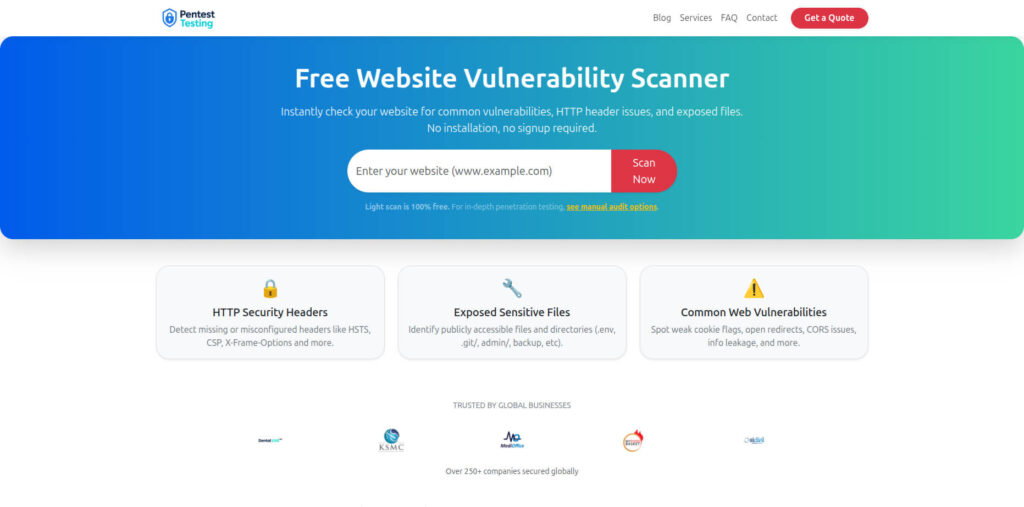
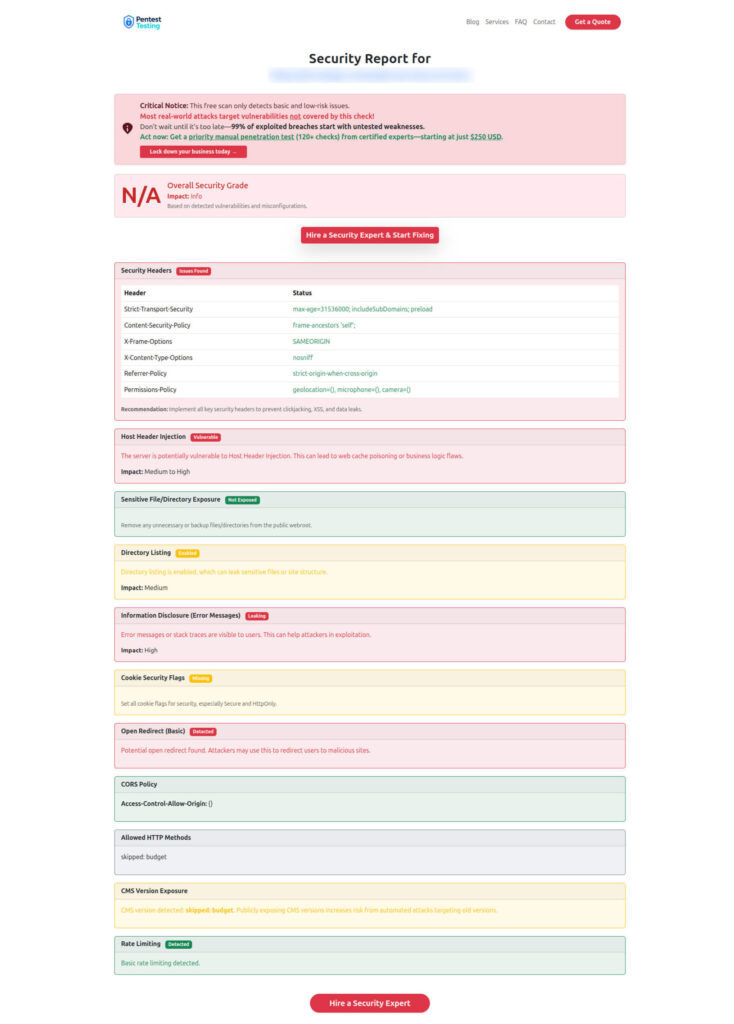
Mobile patching reduces endpoint risk, but mobile apps still rely on APIs, web views, and backend services. A fast, non-intrusive check is to validate your public web surface and headers.
Free tool page (Website Vulnerability Scanner) by Pentest Testing Corp
Sample Scanner Report to check Website Vulnerability (Example Findings)
For deeper validation beyond light scanning (auth flows, business logic, APIs):
- Mobile App Pentest Testing: https://www.pentesttesting.com/mobile-application-pentest-testing/
- API Pentest Testing: https://www.pentesttesting.com/api-pentest-testing-services/
Where Pentest Testing Corp fits (patch → validate → prove)
If your organization needs a professional, client-shareable posture outcome after patch cycles:
- Risk Assessment to define baselines, compliance controls, and audit-ready evidence
- Remediation to implement fixes, MDM enforcement, and guardrails
- DFIR if compromise is suspected before patch rollout
Start here:
- https://www.pentesttesting.com/risk-assessment-services/
- https://www.pentesttesting.com/remediation-services/
- https://www.pentesttesting.com/digital-forensic-analysis-services/
Related reading (from our blog)
- 2 Critical WebKit Zero-Days: 48-Hour Patch Plan — https://www.pentesttesting.com/webkit-zero-day-48-hour-patch-playbook/
- 9 Powerful Patch Evidence Pack Moves for Audit Proof — https://www.pentesttesting.com/audit-ready-patch-evidence-pack/
- 7 Urgent January 2026 Patch Tuesday Fixes for SMBs — https://www.pentesttesting.com/january-2026-patch-tuesday-smb-patch-first/
- 7 Powerful Windows Malware Forensics Wins: Memory+KAPE — https://www.pentesttesting.com/windows-malware-forensics-memory-kape/
- 7 Shocking Truths: Free Vulnerability Scanner Not Enough — https://www.pentesttesting.com/free-vulnerability-scanner-not-enough/
🔐 Frequently Asked Questions (FAQs)
Find answers to commonly asked questions about Mobile Post-Patch Validation Playbook.