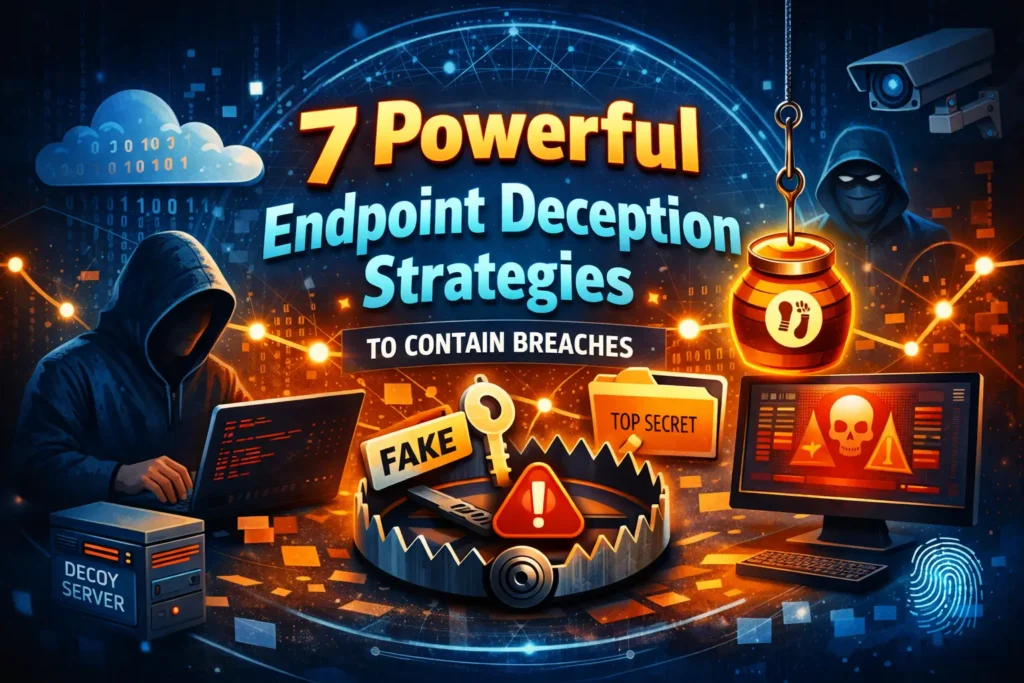
7 Powerful Endpoint Deception Strategies to Contain Breaches
Most security programs are built around detection: EDR alerts, SIEM correlations, dashboards, and “high severity” tickets. But real-world breaches don’t fail because teams can’t detect—they fail because teams can’t contain fast and preserve defensible evidence in the first 30–90 minutes.
That’s where endpoint deception strategies become a force multiplier.
This post shows how to build an endpoint deception fabric—a connected set of decoys, traps, and honey tokens—wired directly into response playbooks so you can:
- Catch attacker behavior early (high-signal, low-noise)
- Trigger containment automatically (or semi-automatically)
- Capture evidence immediately (before it’s wiped, encrypted, or rotated)
- Measure outcomes that matter: dwell time, trap hits, and TTP correlations
If you want expert help designing or validating this approach end-to-end, start here:
- DFIR / Forensic Investigation: https://www.pentesttesting.com/digital-forensic-analysis-services/
- Remediation / Fix & harden after findings: https://www.pentesttesting.com/remediation-services/
- Risk assessment / gap-driven roadmap: https://www.pentesttesting.com/risk-assessment-services/
What an endpoint deception fabric is (and why it works)
A deception fabric is not “random honeypots.” It’s a deliberately designed mesh of:
- Decoys (fake assets that should never be touched)
- Traps (high-signal actions that indicate malicious discovery or access)
- Canaries / honey tokens (unique values that should never be used legitimately)
- Response wiring (SOAR, scripts, EDR actions, evidence capture)
The core principle:
If a normal user or process should never touch something, then any touch is a high-confidence signal.
That’s why endpoint deception strategies can produce “almost zero false positives” when you place them correctly.
Design rules for “high-signal” endpoint deception strategies
Before deploying anything, enforce these rules:
- Never create real access paths. Decoys should not enable lateral movement or privilege escalation.
- Make it cheap to trigger, expensive to ignore. A single trap hit should justify immediate action.
- Place decoys where attackers look. Token caches, config folders, network shares, “IT” docs, and admin-ish naming.
- Instrument evidence capture by default. The alert should automatically collect triage artifacts.
- Make traps verifiable. Each deception event should include a unique ID so you can prove it was a trap hit.
Strategy 1: Honey users that light up credential theft and recon
Honey users work best when they’re:
- Named to attract attacker curiosity (e.g.,
svc_backup,it_admin_audit) - Non-privileged
- Denied interactive logon (or tightly restricted), but still visible enough to be discovered
- Alerted on any auth attempt, Kerberos ticket request, group query, or password spray pattern
Windows (local) honey user – PowerShell
# Create a local honey user (non-admin) with a strong random password
$User = "svc_backup_audit"
$Pass = [System.Web.Security.Membership]::GeneratePassword(28,6) | ConvertTo-SecureString -AsPlainText -Force

New-LocalUser -Name $User -Password $Pass -FullName "Service Backup Audit" `
  -Description "Deception account (should never be used)" -AccountNeverExpires

# Make sure it's NOT an admin
Remove-LocalGroupMember -Group "Administrators" -Member $User -ErrorAction SilentlyContinue

# Optional: prevent password changes to keep it stable as a lure
Set-LocalUser -Name $User -PasswordNeverExpires $true

Write-Output "Honey user created: $User (store password securely, do not reuse anywhere)"
Alerting idea (SIEM/EDR)
- Any logon attempt (success or fail) involving this account should trigger a high severity incident.
- Correlate with the source host + process telemetry.
Strategy 2: Honey tokens that prove compromise without guessing
Honey tokens are “tripwire values” placed where attackers scrape:
.envfiles, config backups, “API Keys” docs- Password managers exported by malware
- Browser autofill dumps
- Developer notes, build logs, CI artifacts
A safe pattern: signed canary API keys
Create tokens that look real but are cryptographically verifiable and uniquely identifiable—without granting real access.
Token generator (Python)
import base64, hmac, hashlib, json, time, os

SECRET = os.environ.get("CANARY_SIGNING_SECRET", "change-me-in-prod").encode()

def make_canary_token(canary_id: str, ttl_days: int = 180) -> str:
    payload = {
        "id": canary_id,
        "iat": int(time.time()),
        "exp": int(time.time()) + ttl_days * 24 * 3600,
        "type": "canary_api_key"
    }
    msg = json.dumps(payload, separators=(",", ":"), sort_keys=True).encode()
    sig = hmac.new(SECRET, msg, hashlib.sha256).digest()
    return "ptc_" + base64.urlsafe_b64encode(msg + b"." + sig).decode().rstrip("=")

print(make_canary_token("CANARY-CRM-ENV-001"))
Middleware detector (Node/Express)
export function detectCanaryToken(req, res, next) {
  const token =
    (req.headers.authorization || "").replace(/^Bearer\s+/i, "") ||
    (req.headers["x-api-key"] || "");

  if (token.startsWith("ptc_")) {
    // Log to SIEM + trigger response playbook (webhook, syslog, queue)
    console.error("CANARY_TOKEN_HIT", {
      ip: req.ip,
      ua: req.headers["user-agent"],
      path: req.originalUrl,
      tokenPrefix: token.slice(0, 16),
      ts: new Date().toISOString()
    });

    // Optional: return a generic auth failure to avoid tipping off the attacker
    return res.status(401).json({ error: "Unauthorized" });
  }

  return next();
}
Why this matters: a canary token hit is often the earliest proof that secrets were accessed, copied, or exfiltrated—before damage shows up.
Strategy 3: Endpoint traps in “attacker-shaped” locations
Attackers hunt for:
- Password exports (
Passwords.xlsx,VPN.txt) - SSH keys (
id_rsa) - RDP files (
.rdp) - Backup configs and deployment notes
- Network shares labeled “Finance”, “HR”, “Backups”, “IT”
Windows decoy share + auditing (PowerShell)
$SharePath = "C:\Decoys\Finance_Reports"
New-Item -ItemType Directory -Force -Path $SharePath | Out-Null

# Create a decoy file (do NOT put real data here)
"Q4 Budget - Confidential (DECOY)" | Out-File "$SharePath\Q4_Budget.xlsx.txt" -Encoding utf8

# Create SMB share
New-SmbShare -Name "Finance_Reports" -Path $SharePath -ReadAccess "Everyone" | Out-Null

# Enable auditing on the folder (SACL) to log reads/writes
# Note: SACL requires 'Audit object access' policy enabled via GPO
$acl = Get-Acl $SharePath
$auditRule = New-Object System.Security.AccessControl.FileSystemAuditRule(
  "Everyone","ReadData,WriteData,CreateFiles,Delete","ContainerInherit,ObjectInherit",
  "None","Success,Failure"
)
$acl.AddAuditRule($auditRule)
Set-Acl $SharePath $acl

Write-Output "Decoy share deployed. Monitor Security logs for object access events."
Linux decoy key + auditd watch
sudo mkdir -p /opt/decoys/ssh
sudo bash -c 'echo "-----BEGIN OPENSSH PRIVATE KEY-----\nDECOY\n-----END OPENSSH PRIVATE KEY-----" > /opt/decoys/ssh/id_rsa'
sudo chmod 600 /opt/decoys/ssh/id_rsa

# Audit reads/writes (requires auditd)
sudo auditctl -w /opt/decoys/ssh/id_rsa -p rwa -k decoy_ssh_key

echo "Decoy deployed. Search audit logs for key=decoy_ssh_key"
Strategy 4: Deception + EDR/XDR + SIEM integration (detection orchestration)
Deception events should land in the same place as your “real” incidents.
Normalize deception events as JSON
{
  "event_type": "deception.trap_hit",
  "trap_id": "TRAP-FIN-SHARE-001",
  "asset": "HOST-23",
  "user": "unknown",
  "src_ip": "10.0.4.55",
  "action": "read",
  "path": "\\\\HOST-23\\Finance_Reports\\Q4_Budget.xlsx.txt",
  "severity": "high",
  "ts": "2026-02-15T10:05:12Z"
}
Lightweight webhook collector (Python/Flask)
from flask import Flask, request, jsonify
import json, sys

app = Flask(__name__)

@app.post("/deception")
def deception():
    evt = request.get_json(force=True)
    # Send to stdout (container logs), syslog, or SIEM forwarder
    print(json.dumps(evt), flush=True)
    # Trigger response automation here (queue/task/EDR API wrapper)
    return jsonify({"ok": True})

if __name__ == "__main__":
    app.run(host="0.0.0.0", port=8080)
Example SIEM queries (templates)
Microsoft Sentinel (KQL)
SecurityEvent
| where EventID in (4624, 4625)
| where Account contains "svc_backup_audit"
| project TimeGenerated, Computer, Account, IpAddress, LogonType, Activity
Splunk (SPL)
index=wineventlog EventCode IN (4624,4625) Account_Name="*svc_backup_audit*"
| stats count min(_time) as firstSeen max(_time) as lastSeen by host, Account_Name, src_ip
Elastic (KQL)
event.code:(4624 or 4625) and winlog.event_data.TargetUserName:*svc_backup_audit*Strategy 5: Response playbooks that contain and capture evidence
This is the “fabric” part: traps must trigger response actions.
Playbook A: Credential theft / honey token hit
Trigger: canary API key used, decoy secret accessed, honey user auth attempt spike
Immediate actions (goal: stop reuse + preserve proof):
- Disable suspected account/session
- Rotate related secrets (API keys, tokens, passwords)
- Snapshot identity logs + access logs
- Triage endpoint that likely leaked the secret
Windows rapid triage (PowerShell)
$Case = "DECEPTION-" + (Get-Date -Format "yyyyMMdd-HHmmss")
$Out  = "C:\IR\$Case"
New-Item -ItemType Directory -Force -Path $Out | Out-Null

wevtutil epl Security "$Out\Security.evtx"
wevtutil epl System "$Out\System.evtx"
wevtutil epl "Microsoft-Windows-PowerShell/Operational" "$Out\PowerShell_Operational.evtx"

Get-Process | Sort-Object CPU -Descending | Select-Object -First 50 |
  Out-File "$Out\top_processes.txt" -Encoding utf8

ipconfig /all  | Out-File "$Out\network_ipconfig.txt" -Encoding utf8
netstat -ano   | Out-File "$Out\netstat_ano.txt" -Encoding utf8
Playbook B: Lateral movement / trap hit on share
Trigger: access to decoy share, decoy admin doc opened, decoy RDP file used
Immediate actions:
- Isolate host (EDR network containment)
- Collect memory/disk triage artifacts
- Hunt for remote execution + credential dumping patterns
- Review neighboring systems for similar trap hits
Playbook C: Ransomware early indicators
Trigger: trap hits + suspicious mass file operations + backup discovery activity
Immediate actions:
- Contain endpoints + servers
- Protect backups (lockdown + immutable snapshots)
- Preserve evidence for insurance/legal and root-cause confirmation
- Validate scope (what was touched, not just what was encrypted)
If you need help executing DFIR-grade containment and evidence handling quickly:
Digital Forensic Analysis Services: https://www.pentesttesting.com/digital-forensic-analysis-services/
Strategy 6: Rapid validation—prove you’ll catch an adversary without false positives
Treat deception like a control that requires testing.
“Trap hit” test (safe simulation)
- Access decoy share from a test machine
- Attempt a honey user logon (expected fail/success depending on your design)
- Present a canary API key to a test endpoint
Post a synthetic event to your webhook (bash)
curl -sS -X POST http://siem-bridge.local:8080/deception \
  -H "Content-Type: application/json" \
  -d '{
    "event_type":"deception.trap_hit",
    "trap_id":"TRAP-FIN-SHARE-001",
    "asset":"TEST-HOST-01",
    "user":"tester",
    "src_ip":"10.0.9.9",
    "action":"read",
    "severity":"high",
    "ts":"'"$(date -u +%Y-%m-%dT%H:%M:%SZ)"'"
  }'
Pass criteria:
- Alert appears in SIEM within your target window (e.g., <60 seconds)
- Ticket created with trap context (trap_id, host, source, path)
- Containment and evidence capture steps are ready (manual or automated)
Strategy 7: Metrics that matter (and how to measure them)
Track metrics that reflect real security outcomes:
- Dwell time (first suspicious activity → containment)
- Mean time to trap hit (how quickly attackers touch decoys)
- Trap hit ratio (trap hits / active endpoints)
- TTP correlation (trap hits that align with credential theft, lateral movement, ransomware)
Simple metric extraction (SQL-style)
-- Example table: deception_events(trap_id, asset, ts, severity)
SELECT
  trap_id,
  COUNT(*) AS hits,
  MIN(ts)  AS first_hit,
  MAX(ts)  AS last_hit
FROM deception_events
WHERE ts >= NOW() - INTERVAL '30 days'
GROUP BY trap_id
ORDER BY hits DESC;
Quick analysis (Python)
import pandas as pd

df = pd.read_csv("deception_events.csv")  # export from SIEM
df["ts"] = pd.to_datetime(df["ts"], utc=True)

summary = (df.groupby("trap_id")
             .agg(hits=("trap_id","size"),
                  first_hit=("ts","min"),
                  last_hit=("ts","max"))
             .sort_values("hits", ascending=False))

print(summary.head(10))
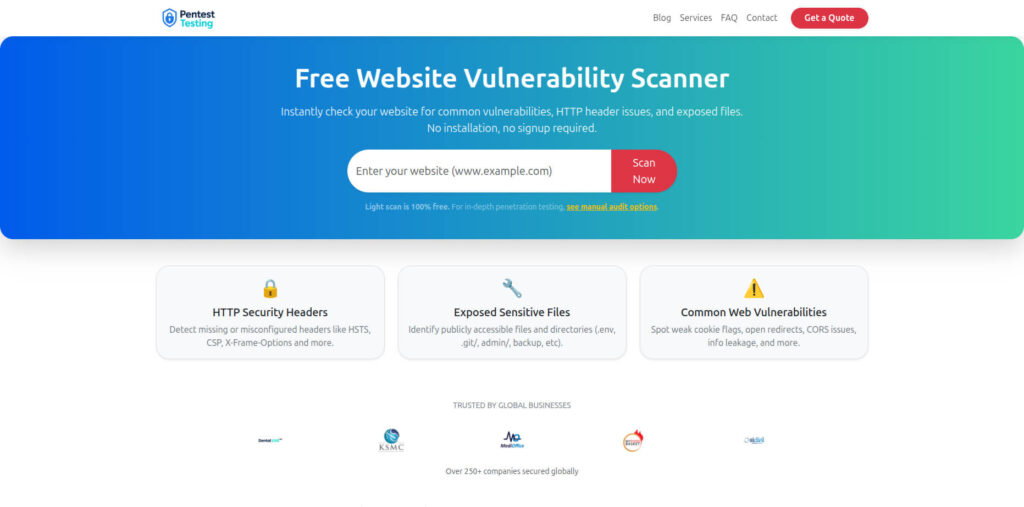
Add external proofing with our free scanner
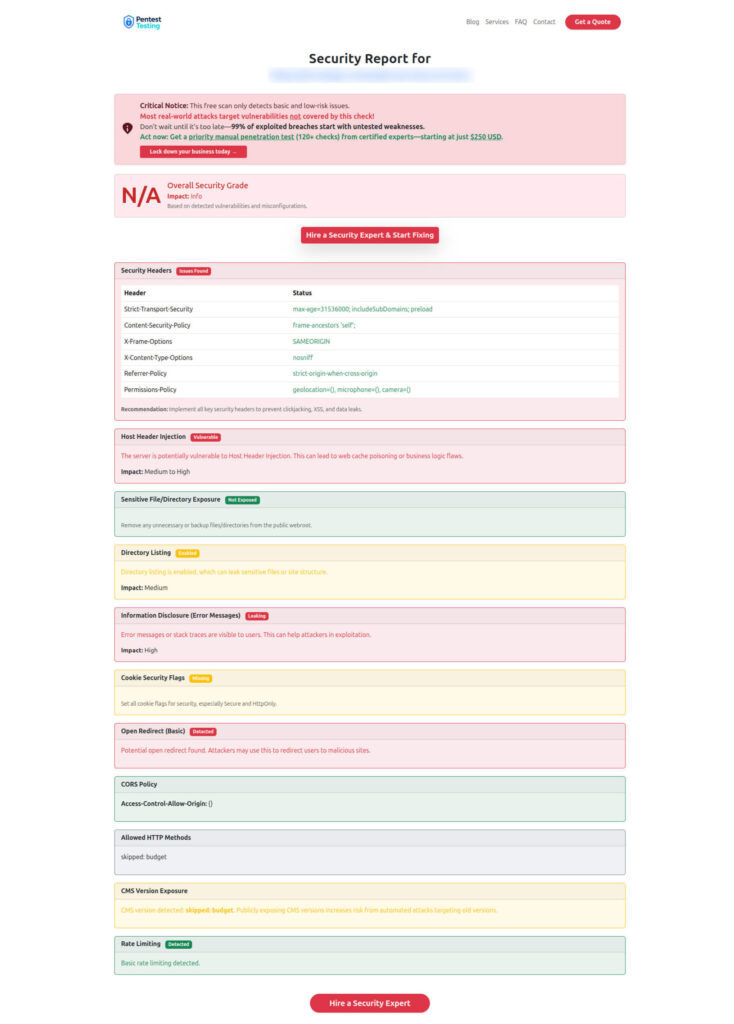
A deception fabric strengthens internal detection orchestration—but you should also validate what attackers see from the outside.
Free Website Vulnerability Scanner tool page
Sample report to check Website Vulnerability
Related recent reads (from our blog)
If you’re aligning deception with forensic readiness and post-patch proofing, these pair well:
- https://www.pentesttesting.com/forensic-readiness-smb-log-retention/
- https://www.pentesttesting.com/cve-2026-21509-office-zero-day-triage-dfir/
- https://www.pentesttesting.com/forensic-driven-security-hardening/
- https://www.pentesttesting.com/post-patch-forensics-playbook-2026/
- https://www.pentesttesting.com/rapid-dfir-checklist-patch-to-proof/
Practical next steps (do this this week)
- Pick 3 trap placements (endpoint + share + honey token) that should never be touched.
- Wire trap hits into one containment action (EDR isolate, account lock, secret rotation ticket).
- Automate evidence capture on first hit (logs + process + network snapshot).
- Run a validation drill and measure time-to-alert and time-to-contain.
- If you want a scoped roadmap and implementation plan:
- Risk Assessment Services: https://www.pentesttesting.com/risk-assessment-services/
- Remediation Services: https://www.pentesttesting.com/remediation-services/
- DFIR / Forensic Analysis: https://www.pentesttesting.com/digital-forensic-analysis-services/
🔐 Frequently Asked Questions (FAQs)
Find answers to commonly asked questions about Endpoint Deception Strategies to Contain Breaches.