7-Step Powerful CVE-2026-21509 Office Zero-Day Triage
When a Microsoft Office zero-day like CVE-2026-21509 is reported as actively exploited, the real work is not just “patch.” The real work is patch + prove impact: quickly reduce exposure, identify likely compromise signals, and capture defensible forensic evidence—across Windows endpoints and Microsoft 365 (M365).
This post is a rapid triage + forensic collection checklist designed for SMBs, MSPs, and internal IT/security teams who need a practical, DEV-friendly playbook with copy/paste-ready commands.
If you need hands-on incident support, start here: Digital Forensic Analysis Services (DFIR)
https://www.pentesttesting.com/digital-forensic-analysis-services/
Related reading: Forensic Readiness for SMBs: What to Log, Keep, and Prove Before the Next Incident (Chain of Custody + Evidence Pack)
https://www.pentesttesting.com/forensic-readiness-smb-log-retention/
1) What CVE-2026-21509 is (and what “security feature bypass” means)
CVE-2026-21509 is a Microsoft Office security feature bypass class issue. In plain terms:
- Office has built-in safety controls designed to warn, restrict, or sandbox risky content (especially content originating from email, downloads, or external sources).
- A “security feature bypass” means attackers can craft content to circumvent those protections, increasing the chance that a malicious document leads to execution of follow-on activity (payload staging, script launch, persistence), often through user interaction (opening a file).
What “bypass” looks like during an incident
In real-world triage, feature-bypass exploitation often correlates with:
- Office processes spawning unusual child processes (PowerShell, cmd, mshta, wscript, rundll32, regsvr32)
- Suspicious activity immediately after opening a document: new scheduled tasks, Run keys, new services, new DLLs in user-writable paths
- Mailbox rule manipulation / sign-in anomalies / suspicious OAuth consent in M365
2) Immediate actions (first 24 hours)
Your goal in the first day: stop new exploitation, confirm patch coverage, and preserve evidence.
A. Isolate likely impacted endpoints (fast containment)
Prioritize isolation if any of the following are true:
- User reports opening an unexpected Office attachment recently
- EDR flags suspicious child processes from Office apps
- New persistence artifacts appear shortly after Office document opens
- M365 shows suspicious inbox rules / sign-ins / OAuth grants
Practical isolation checklist
- Remove from network (EDR isolate if available; otherwise VLAN quarantine).
- Keep the device powered on if you plan memory capture (see Section 4).
- Preserve: user context, device name, last opened attachment name(s), approximate time, and mail subject/sender.
If you need structured remediation support after triage, see:
https://www.pentesttesting.com/remediation-services/
B. Patch scope: identify who’s vulnerable and who’s fixed
You need two outputs:
- Inventory of Office installs + versions/builds
- Evidence of update applied (and application restart if required)
PowerShell: collect Office Click-to-Run version/build evidence
$OutDir = "C:\IR\CVE-2026-21509\PatchEvidence"
New-Item -ItemType Directory -Force -Path $OutDir | Out-Null

$ctr = "HKLM:\SOFTWARE\Microsoft\Office\ClickToRun\Configuration"
if (Test-Path $ctr) {
  Get-ItemProperty $ctr |
    Select-Object ClientCulture, Platform, ProductReleaseIds, VersionToReport, ClientVersionToReport, CDNBaseUrl |
    ConvertTo-Json | Out-File "$OutDir\Office_ClickToRun_Config.json" -Encoding utf8
}

# Installed Office products (Uninstall registry)
$uninstallPaths = @(
  "HKLM:\SOFTWARE\Microsoft\Windows\CurrentVersion\Uninstall\*",
  "HKLM:\SOFTWARE\WOW6432Node\Microsoft\Windows\CurrentVersion\Uninstall\*"
)

Get-ItemProperty $uninstallPaths -ErrorAction SilentlyContinue |
  Where-Object { $_.DisplayName -match "Microsoft 365|Microsoft Office" } |
  Select-Object DisplayName, DisplayVersion, Publisher, InstallDate |
  Sort-Object DisplayName |
  Export-Csv "$OutDir\Office_InstalledProducts.csv" -NoTypeInformation

Write-Host "Saved patch scope evidence to $OutDir"
“Proof of restart” (quick operational check)
If your environment uses M365 Apps / Click-to-Run servicing, capture evidence that Office apps were restarted after updates:
$OutDir = "C:\IR\CVE-2026-21509\PatchEvidence"
New-Item -ItemType Directory -Force -Path $OutDir | Out-Null

# List currently running Office processes (captures whether users kept apps running for days)
Get-Process winword, excel, powerpnt, outlook -ErrorAction SilentlyContinue |
  Select-Object Name, Id, StartTime |
  Export-Csv "$OutDir\Office_ProcessStartTimes.csv" -NoTypeInformation
C. Block risky file flows (reduce new attacks today)
Pick the controls you can deploy fastest:
Email attachment controls
- Quarantine or warn for inbound Office docs from external senders (DOC/DOCX/XLS/XLSX/PPT/PPTX/RTF)
- Block/hold high-risk containers (ISO/IMG, password-protected archives) if used in your attacks
Endpoint hardening controls (high leverage)
- Enable Attack Surface Reduction (ASR) rules (especially blocking Office child process creation)
- Enforce macro restrictions from untrusted sources
- Increase EDR scrutiny for Office-spawned scripting engines
If you’re unsure which hardening actions fit your environment, start with a scoped Risk Assessment:
https://www.pentesttesting.com/risk-assessment-services/
3) Triage signals on Windows endpoints (fast + high-signal)
This section is built around what responders actually look for during Office exploit detection.
A. Prefetch (execution evidence)
If Prefetch is enabled, it can help confirm execution timing for Office apps and suspicious child processes.
$OutDir = "C:\IR\CVE-2026-21509\EndpointTriage"
New-Item -ItemType Directory -Force -Path $OutDir | Out-Null

$pf = "C:\Windows\Prefetch"
if (Test-Path $pf) {
  Get-ChildItem $pf -Filter "*.pf" |
    Where-Object { $_.Name -match "WINWORD|EXCEL|POWERPNT|OUTLOOK|POWERSHELL|CMD|MSHTA|WSCRIPT|CSCRIPT|RUNDLL32|REGSVR32" } |
    Sort-Object LastWriteTime -Descending |
    Select-Object Name, LastWriteTime, Length |
    Export-Csv "$OutDir\Prefetch_Hits.csv" -NoTypeInformation
}
B. Recent files + Jump Lists (user interaction clues)
Office exploitation often relies on opening a malicious attachment. These artifacts help you connect who opened what and when.
$OutDir = "C:\IR\CVE-2026-21509\EndpointTriage"
New-Item -ItemType Directory -Force -Path $OutDir | Out-Null

$recent = "$env:APPDATA\Microsoft\Windows\Recent"
$jumps  = "$env:APPDATA\Microsoft\Windows\Recent\AutomaticDestinations"
$custom = "$env:APPDATA\Microsoft\Windows\Recent\CustomDestinations"

Get-ChildItem $recent -ErrorAction SilentlyContinue |
  Sort-Object LastWriteTime -Descending |
  Select-Object Name, LastWriteTime, Length |
  Export-Csv "$OutDir\Recent_Files.csv" -NoTypeInformation

Get-ChildItem $jumps,$custom -ErrorAction SilentlyContinue |
  Sort-Object LastWriteTime -Descending |
  Select-Object FullName, LastWriteTime, Length |
  Export-Csv "$OutDir\JumpLists_Files.csv" -NoTypeInformation
C. Office spawning child processes (classic exploitation + living-off-the-land)
If you have Security 4688 events and/or Sysmon, hunt for Office apps as parent processes.
Windows Event Log (4688) quick filter (best-effort)
$OutDir = "C:\IR\CVE-2026-21509\EndpointTriage"
New-Item -ItemType Directory -Force -Path $OutDir | Out-Null

# Requires Process Creation auditing (4688)
$start = (Get-Date).AddDays(-7)

Get-WinEvent -FilterHashtable @{LogName="Security"; Id=4688; StartTime=$start} -ErrorAction SilentlyContinue |
  Where-Object { $_.Message -match "WINWORD.EXE|EXCEL.EXE|POWERPNT.EXE|OUTLOOK.EXE" } |
  Select-Object TimeCreated, Id, Message |
  Export-Csv "$OutDir\Security_4688_OfficeParents.csv" -NoTypeInformation
Microsoft Defender for Endpoint (MDE) KQL: Office → suspicious child
DeviceProcessEvents
| where Timestamp > ago(7d)
| where InitiatingProcessFileName in~ ("winword.exe","excel.exe","powerpnt.exe","outlook.exe")
| where FileName in~ ("powershell.exe","cmd.exe","mshta.exe","wscript.exe","cscript.exe","rundll32.exe","regsvr32.exe","schtasks.exe","bitsadmin.exe")
| project Timestamp, DeviceName, AccountName, InitiatingProcessFileName, InitiatingProcessCommandLine, FileName, ProcessCommandLine, FolderPath, SHA256
| order by Timestamp desc
D. Persistence (what attackers do after initial execution)
Hunt the basics—fast:
$OutDir = "C:\IR\CVE-2026-21509\Persistence"
New-Item -ItemType Directory -Force -Path $OutDir | Out-Null

# Scheduled tasks
schtasks /query /fo LIST /v > "$OutDir\ScheduledTasks_full.txt"

# Run keys (common)
reg query "HKCU\Software\Microsoft\Windows\CurrentVersion\Run" /s > "$OutDir\HKCU_Run.txt"
reg query "HKLM\Software\Microsoft\Windows\CurrentVersion\Run" /s > "$OutDir\HKLM_Run.txt"
reg query "HKLM\Software\WOW6432Node\Microsoft\Windows\CurrentVersion\Run" /s > "$OutDir\HKLM_WOW_Run.txt"

# Services
Get-CimInstance Win32_Service |
  Select-Object Name, DisplayName, State, StartMode, PathName |
  Export-Csv "$OutDir\Services.csv" -NoTypeInformation

# Startup folders
Get-ChildItem "$env:APPDATA\Microsoft\Windows\Start Menu\Programs\Startup" -ErrorAction SilentlyContinue |
  Select-Object FullName, LastWriteTime, Length |
  Export-Csv "$OutDir\StartupFolder_User.csv" -NoTypeInformation
Get-ChildItem "C:\ProgramData\Microsoft\Windows\Start Menu\Programs\Startup" -ErrorAction SilentlyContinue |
  Select-Object FullName, LastWriteTime, Length |
  Export-Csv "$OutDir\StartupFolder_All.csv" -NoTypeInformation
4) Fast evidence capture (memory-first if feasible; then disk triage)
If you suspect active exploitation of CVE-2026-21509, the order matters:
- Memory capture (if feasible and authorized)
- Minimal but high-value disk triage collection
- Hash everything (tamper-evident chain)
A. Memory capture (practical guidance)
- If the device is still running and you suspect live malware, memory capture can preserve:
- injected code indicators
- decrypted configuration
- live network connections
- process trees at time of compromise
If you can’t safely capture memory, don’t improvise. Move to disk triage and preserve logs.
B. Disk triage collector (built-in, defensible)
This collects high-value artifacts without third-party tools.
$Base = "C:\IR\CVE-2026-21509\Evidence"
New-Item -ItemType Directory -Force -Path $Base | Out-Null

# System & security event logs (triage window)
wevtutil epl Security "$Base\Security.evtx"
wevtutil epl System "$Base\System.evtx"
wevtutil epl "Microsoft-Windows-Windows Defender/Operational" "$Base\Defender_Operational.evtx"

# Windows Update operational (patch proof context)
wevtutil epl "Microsoft-Windows-WindowsUpdateClient/Operational" "$Base\WindowsUpdateClient_Operational.evtx"

# Basic host context
systeminfo > "$Base\systeminfo.txt"
ipconfig /all > "$Base\ipconfig_all.txt"
tasklist /v > "$Base\tasklist_v.txt"
netstat -ano > "$Base\netstat_ano.txt"

# Prefetch + Recent + Jump Lists (copy)
robocopy "C:\Windows\Prefetch" "$Base\Prefetch" *.pf /R:0 /W:0 /NFL /NDL /NJH /NJS
robocopy "$env:APPDATA\Microsoft\Windows\Recent" "$Base\Recent" /E /R:0 /W:0 /NFL /NDL /NJH /NJS
robocopy "$env:APPDATA\Microsoft\Windows\Recent\AutomaticDestinations" "$Base\JumpLists_Auto" /E /R:0 /W:0 /NFL /NDL /NJH /NJS
robocopy "$env:APPDATA\Microsoft\Windows\Recent\CustomDestinations" "$Base\JumpLists_Custom" /E /R:0 /W:0 /NFL /NDL /NJH /NJS

# Registry hives (user + system) — high value in DFIR
reg save HKLM\SOFTWARE "$Base\HKLM_SOFTWARE.hiv" /y
reg save HKLM\SYSTEM   "$Base\HKLM_SYSTEM.hiv" /y
reg save HKU\.DEFAULT  "$Base\HKU_DEFAULT.hiv" /y

Write-Host "Collected core evidence to $Base"
C. Hash manifest (tamper-evident)
$Base = "C:\IR\CVE-2026-21509\Evidence"
Get-ChildItem $Base -Recurse -File |
  Get-FileHash -Algorithm SHA256 |
  Select-Object Hash, Path |
  Out-File "$Base\sha256_manifest.txt" -Encoding utf8
Need a formal evidence pack, timeline analysis, and reporting? Our DFIR team can take over at any point:
https://www.pentesttesting.com/digital-forensic-analysis-services/
5) Microsoft 365 / Exchange / mail telemetry to review
CVE-2026-21509 exploitation often begins with email delivery (malicious attachment or link). Your M365 telemetry can reveal who received it, who opened it, and whether the attacker attempted mailbox persistence or identity abuse.
A. Inbox rules & mailbox forwarding (persistence in email)
Exchange Online PowerShell (examples)
# Requires Exchange Online module + appropriate permissions
Connect-ExchangeOnline

# Suspicious inbox rules (look for delete/forward/redirect behaviors)
Get-InboxRule -Mailbox [email protected] |
  Select-Object Name, Enabled, Priority, From, SubjectContainsWords, BodyContainsWords, ForwardTo, RedirectTo, DeleteMessage, StopProcessingRules |
  Format-List

# Forwarding settings (mailbox-level)
Get-Mailbox [email protected] | Select-Object UserPrincipalName, ForwardingSmtpAddress, DeliverToMailboxAndForward
B. Sign-in anomalies (initial access + lateral movement)
If you use Microsoft Sentinel / Entra ID logs, start with:
- new country / new ASN / unfamiliar IP
- impossible travel patterns
- repeated failures followed by success
- sign-ins from legacy protocols (if still enabled)
KQL (generic pattern)
SigninLogs
| where TimeGenerated > ago(14d)
| where ResultType == 0
| project TimeGenerated, UserPrincipalName, IPAddress, AppDisplayName, ClientAppUsed, ConditionalAccessStatus, DeviceDetail, LocationDetails
| order by TimeGenerated desc
C. OAuth app consents / suspicious grants (quiet persistence)
Attackers love OAuth because it survives password changes if not revoked.
KQL (Audit logs high-level filter)
AuditLogs
| where TimeGenerated > ago(30d)
| where OperationName has_any ("Consent","Add service principal","Add app role assignment","Update application","Add delegated permission")
| project TimeGenerated, OperationName, InitiatedBy, TargetResources, Result
| order by TimeGenerated desc
D. Mail flow (who sent/received the lure)
In the first 24 hours, capture:
- the sender address/domain
- recipients
- message IDs (if available)
- attachment names/hashes (if your tooling exposes it)
This supports: scoping, user notifications, and blocking rules.
6) Containment + remediation plan (reset/rotate, reimage, monitor)
Once you have scoping and triage signals, act decisively.
A. Containment actions (prioritize speed + blast-radius reduction)
- Isolate impacted endpoints
- Block similar inbound attachments (temporary transport rules)
- Disable suspicious inbox rules and remove forwarding
- Revoke suspicious OAuth grants / app consents
- Force sign-out / revoke refresh tokens for impacted users (where applicable)
- Increase alerting for Office-spawned scripting engines and suspicious scheduled task creation
B. Reset/rotate (do it in the correct order)
If compromise is likely:
- Reset user passwords + enforce MFA re-registration if required
- Rotate privileged credentials that touched the endpoint
- Rotate service credentials if evidence suggests access
- Reissue device compliance where MDM/Intune is used
C. Reimage vs. clean
- If you see persistence you can’t fully explain: reimage
- If EDR confirms full remediation and you have good evidence: clean may be acceptable (but document it)
If you want guided remediation with audit-ready proof, see:
https://www.pentesttesting.com/remediation-services/
7) When to escalate to DFIR (decision tree + typical deliverables)
DFIR escalation decision tree (quick)
Did a user open an unexpected Office attachment recently?
 ├─ No → Patch + monitor + harden controls (ASR/email rules)
 └─ Yes
     ├─ Any Office → PowerShell/cmd/mshta/wscript child process signals?
     │   ├─ Yes → Isolate endpoint → Evidence capture → DFIR recommended
     │   └─ No
     │       ├─ Any new persistence (tasks/run keys/services) within 24h?
     │       │   ├─ Yes → Isolate → Evidence capture → DFIR recommended
     │       │   └─ No
     │       │       ├─ M365 anomalies (rules/forwarding/sign-ins/OAuth grants)?
     │       │       │   ├─ Yes → Identity containment + DFIR recommended
     │       │       │   └─ No → Keep evidence pack + heightened monitoring 14–30d
Typical DFIR deliverables (what you should expect)
- Incident timeline (endpoint + identity + mail)
- Evidence pack with hash manifest
- Root cause hypothesis + validated indicators
- Scope and impact assessment
- Remediation plan + verification checklist
- Executive summary + technical appendix
Need DFIR help right now?
https://www.pentesttesting.com/digital-forensic-analysis-services/
Free Website Vulnerability Scanner tool page (dashboard)
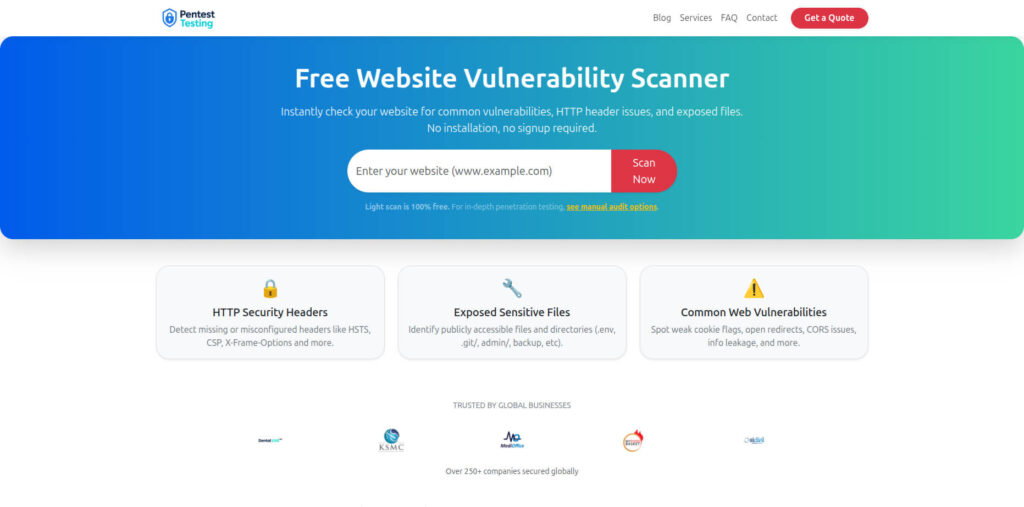
Tool page link: https://free.pentesttesting.com/
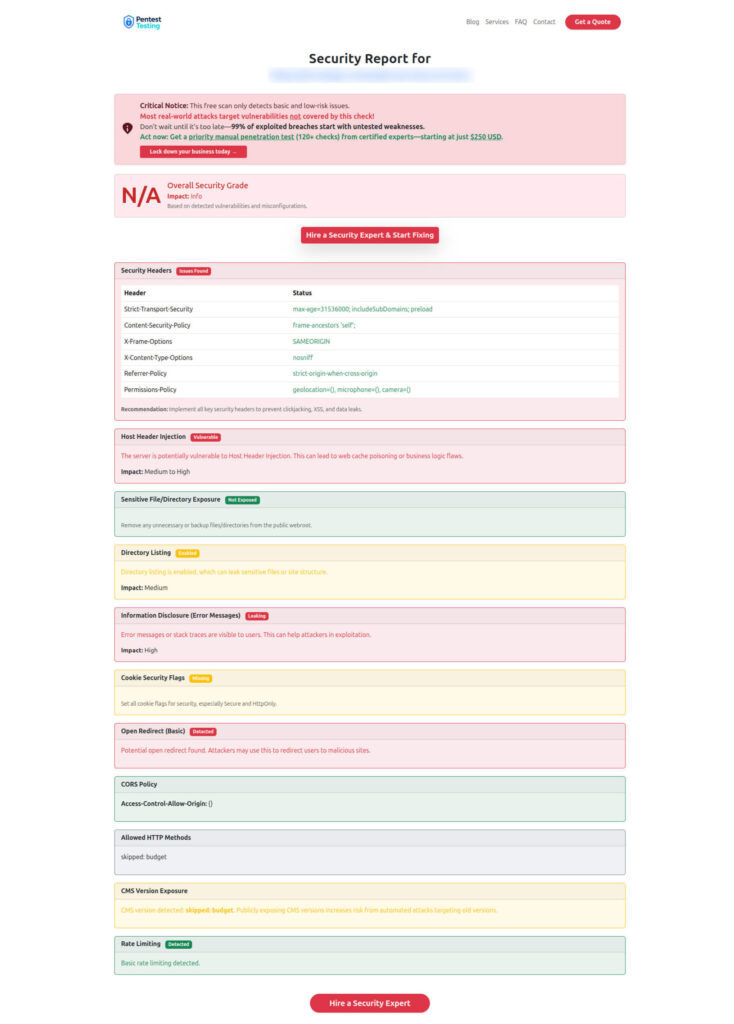
Sample report output to check Website Vulnerability
Related recent reads from our blog (internal links)
- 9 Powerful Forensic-Driven Security Hardening Steps: https://www.pentesttesting.com/forensic-driven-security-hardening/
- 9-Step Post-Patch Forensics Playbook: Bulletproof Clean: https://www.pentesttesting.com/post-patch-forensics-playbook-2026/
- 9 Powerful Rapid DFIR Checklist: Patch to Proof: https://www.pentesttesting.com/rapid-dfir-checklist-patch-to-proof/
- 7 Powerful Windows Malware Forensics Wins: Memory+KAPE: https://www.pentesttesting.com/windows-malware-forensics-memory-kape/
- 9 Powerful Patch Evidence Pack Moves for Audit Proof: https://www.pentesttesting.com/audit-ready-patch-evidence-pack/
- 7 Powerful KEV-Driven Vulnerability Management Sprint: https://www.pentesttesting.com/kev-driven-vulnerability-management-sprint/
- 7 Urgent January 2026 Patch Tuesday Fixes for SMBs: https://www.pentesttesting.com/january-2026-patch-tuesday-smb-patch-first/
- 7 Powerful Mobile Post-Patch Validation Playbook: https://www.pentesttesting.com/mobile-post-patch-validation-playbook/
- 7 Critical iPhone Suspicious Activity DFIR Checklist: https://www.pentesttesting.com/iphone-suspicious-activity-dfir-checklist/
🔐 Frequently Asked Questions (FAQs)
Find answers to commonly asked questions about CVE-2026-21509 Office Zero-Day Triage.